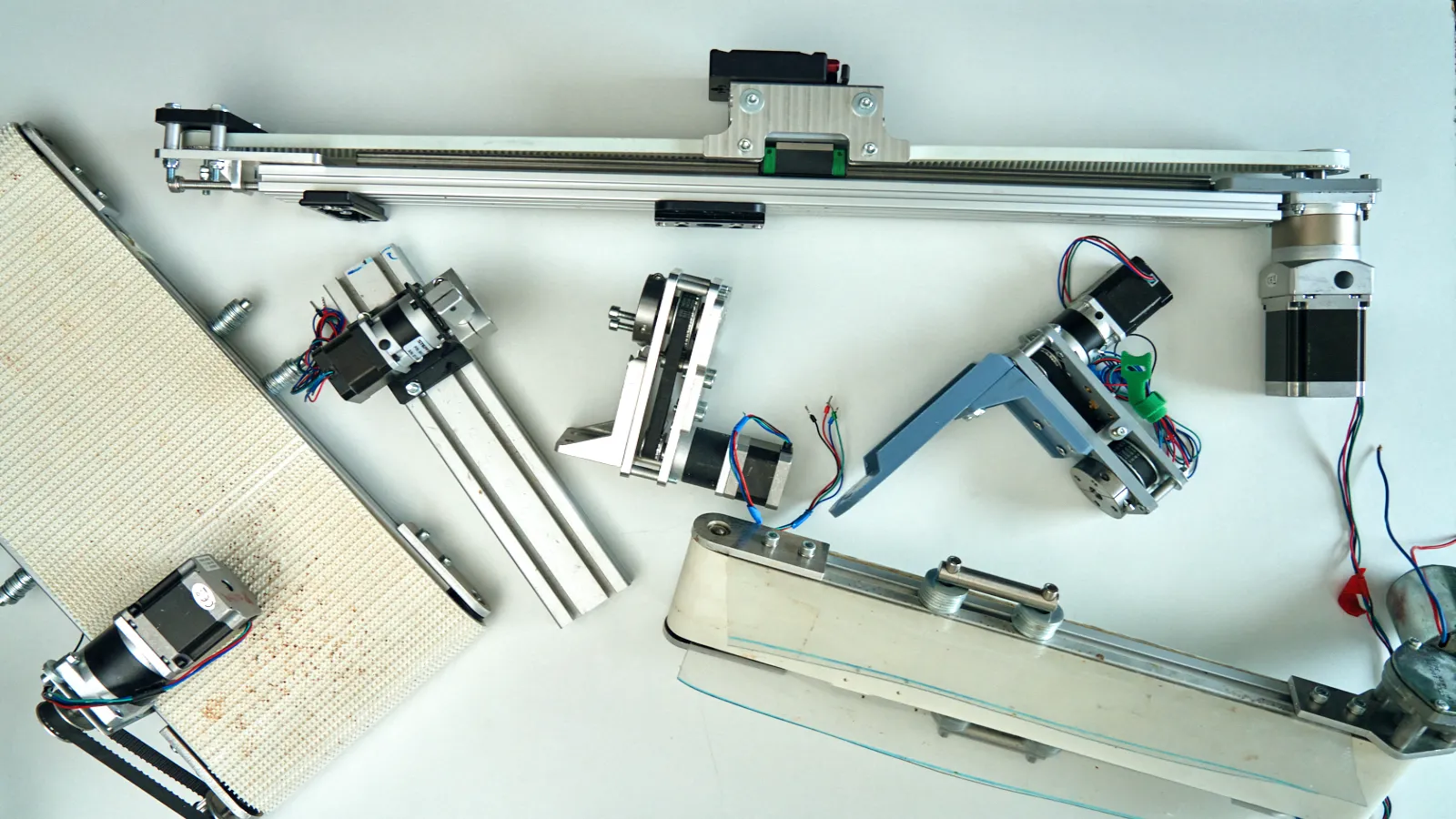
Tabletop motion control is useful when a food or product shot needs repeatable movement, precise timing or the same camera move across several takes.
It is also one of the easiest categories to overbuy.
Many beginners buy motion-control systems before they have built a working pneumatic rig, before they understand lighting for slow motion, and before they know what kind of shots they actually need to repeat.
That is when motion control becomes expensive decoration.
The honest question is not “Is motion control useful?” It is. The real question is: Do you actually need it for the shots you are making now?
Tabletop motion control: promise vs reality
The goal of tabletop motion control is not to make the rig look more advanced, but to make the shot more repeatable, controllable and easier to match across multiple takes.
The promise of motion control is attractive. A motorized slider moves the camera smoothly. A programmed pouring rig tilts a bottle at the same speed every take. A controller fires multiple motors, solenoids and triggers in a planned sequence.
For some tabletop work, that is exactly what you need.
But motion control does not automatically make a shot better. It makes movement more repeatable. That is not the same thing.
If a hand-pushed slider, a manual pour or a simple trigger already gives you the shot you need, motion control may not improve the image. It may only make the setup slower, more expensive and more complicated.
Motion control is valuable when repeatability, smoothness or synchronization solves a real problem.
Tabletop motion control: when it actually makes sense
Tabletop motion control makes sense when manual movement becomes too random. Motorized sliders, pouring rigs, rotating platforms, conveyor belts and synchronized camera moves all become easier when the movement can be repeated instead of guessed by hand.
When motion control is worth it
Motion control becomes useful when human movement is not consistent enough for the shot.
There are three common cases where it makes sense in tabletop food and product work.
1. You need matching takes
If you shoot the same product repeatedly and several takes need to cut together, motion control can save a lot of time.
A hand-pushed slider never moves exactly the same way twice. The speed changes slightly. The start and stop are different. The timing drifts.
A motorized move can repeat the same path at the same speed. This makes editing easier when you need to combine several takes into one final sequence.
This is especially useful for brand films, explainers, launch videos, product series and shots where the camera move must match across different versions.
2. You need very slow, very smooth movement
Slow movement is hard by hand.
A ten-second push-in, tilt or pull-back looks simple, but small hand tremors become visible. At high frame rates, even a tiny irregularity can create unwanted judder.
A stepper motor can move slowly and consistently in a way that is difficult to do by hand. This is one of the cases where motion control can create a better shot, not only a more repeatable one.
Slow product reveals, controlled push-ins, gentle camera slides and precise tilt moves are good examples.
3. You need synchronized multi-rig timing
Motion control also makes sense when several actions must happen together.
For example, a slide drop releases food, a syringe splash hits from below, the camera tracks in, and a second trigger fires at a specific delay. Doing that manually is possible in theory, but not reliably.
A motion-control or trigger-control system lets you define timing. One rig fires first, another after a delay, the camera move begins at a defined speed, and the sequence becomes repeatable.
This is where systems like Mantis, Dragonframe or custom Arduino setups become useful.
When motion control is overkill
Motion control is not always the right first purchase.
There are many tabletop shots where it adds complexity without adding real value.
1. One hero take is enough
If the final deliverable is one excellent take, repeatability may not matter much.
A product drop, splash, pour or impact shot may only need one perfect result. If you get that result manually, the client does not care whether take two and take three match exactly.
In this kind of work, a locked-off camera, manual trigger or simple pneumatic rig may be enough.
2. Simple high-speed actions
High-speed footage already gives you a lot of visible detail from a short event.
A single product drop into milk, captured at 1000 fps, may not need a motorized camera move or frame-accurate multi-rig sync. The slow-motion factor already stretches the moment and makes small timing differences less important.
Do not add motion control just because it sounds more professional. Add it when it solves something visible.
3. You are still discovering your shot style
This is the biggest beginner issue.
If you do not yet know whether you mostly need drops, splashes, pours, rotations, conveyor moves or camera sliders, you probably should not buy a full motion-control system yet.
Different shots need different motors, drivers, power supplies, controllers, mounting systems and safety considerations. If you buy before you understand the problem, there is a good chance you buy the wrong configuration.
Build simple rigs first. Notice where manual control fails. Then buy motion control for that specific problem.
The motorized slider: the first real use case
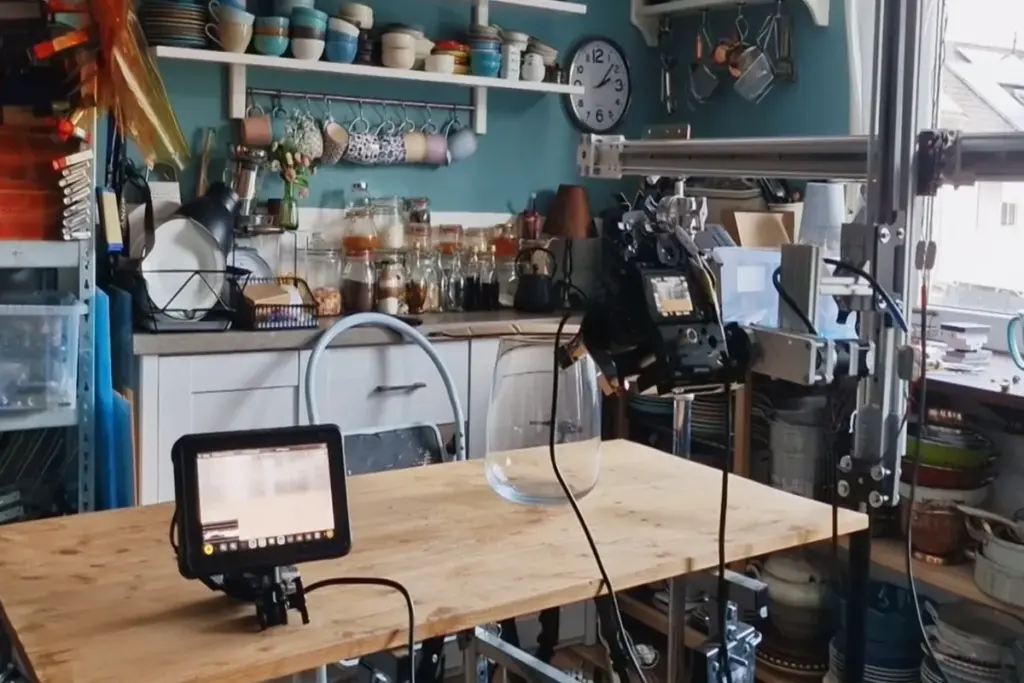
If you add one motion-control element first, a motorized slider is usually the safest choice.
A slider is useful across many types of tabletop work. It can move the camera smoothly past a product, push into a hero shot, track along ingredients, or create a controlled reveal.
The basic idea is simple: a motor pulls the camera along a rail at a programmed speed.
A motorized slider improves shots where the move needs to be smooth, slow or repeatable. It does not improve shots that already work better with a locked-off camera.
Good uses for a motorized slider
- slow push-ins toward a product
- controlled pull-backs from a detail
- tracking shots across ingredients
- repeatable product reveal moves
- moves that must match between takes
A small stepper motor such as a NEMA 17 can be enough for many lightweight slider setups, especially with mirrorless cameras or small cinema cameras. Heavier rigs may need stronger motors, better rails or a different mechanical setup.
Motorized pouring: when tilt becomes control
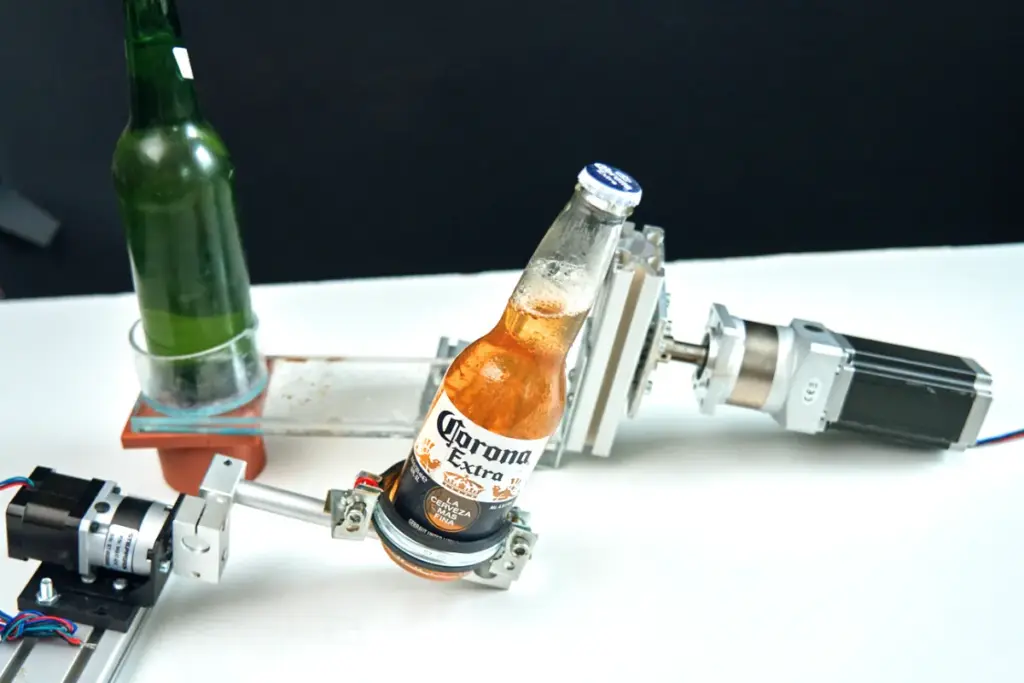
Motorized pouring is another strong motion-control use case.
A bottle, pitcher or container is mounted in a cradle. A motor tilts it through a controlled angle at a controlled speed. The liquid starts moving at the same point and follows a similar arc every take.
This matters when the pour itself is the hero action.
Manual pouring can work for loose, forgiving shots. But for tight slow-motion pours, hand movement creates small changes in angle, speed and flow. Those small changes can change the whole shot.
A motorized pour rig gives you:
- repeatable tilt angle
- controlled pour speed
- consistent start point
- better matching between takes
- less hand wobble
This is useful for beverage commercials, sauce shots, luxury drink pours and product reveals where the liquid movement must feel deliberate.
The conveyor belt: the underrated motion-control rig
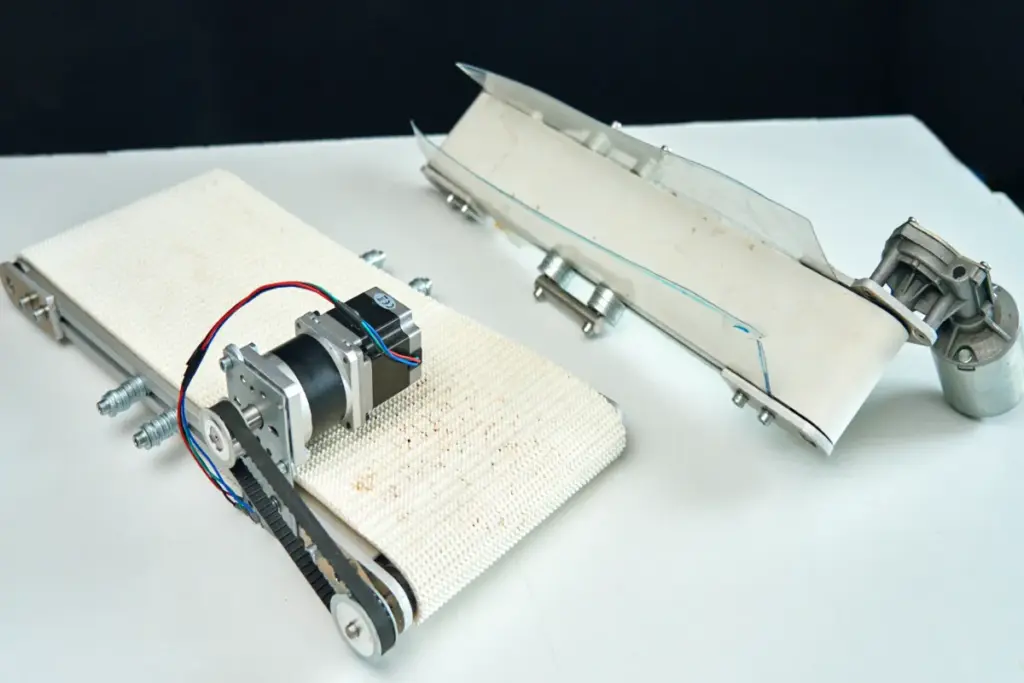
A small conveyor belt is less flashy than a slider or pouring rig, but it can be very useful in commercial tabletop work.
It moves objects through frame at a controlled speed.
This can be used for product lines, ingredient movement, background motion or factory-style visuals. The camera can stay locked while the product moves, or the conveyor can combine with a camera move for more complex shots.
Useful conveyor belt shots
- products gliding through frame
- ingredients moving in a line
- repeating product reveal shots
- factory-style brand visuals
- background motion behind a hero product
A conveyor does not need to be large. A small tabletop belt driven by a stepper motor or geared DC motor can be enough for many products.
The key is speed control and stability.
Mantis, Dragonframe or Arduino?
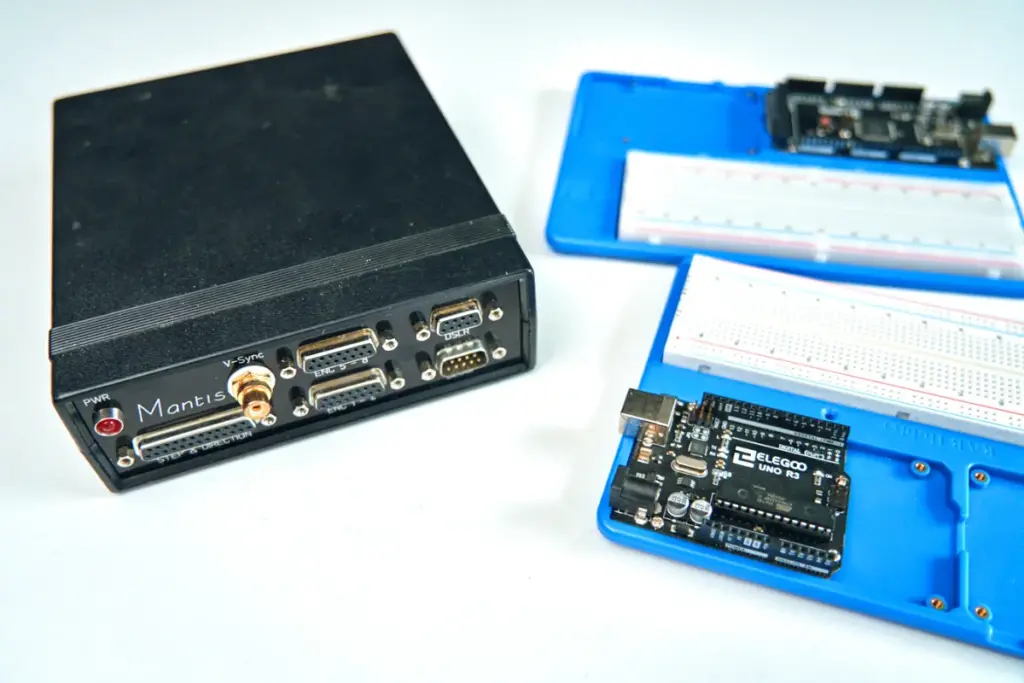
There is no single best motion-control system for everyone. The right choice depends on budget, technical comfort and the type of work you do.
Mantis 2
Mantis is designed around motion-control workflows for film and tabletop work. It is useful when you need multi-motor coordination, repeatable moves and synchronized triggers.
For paid work and more advanced setups, a dedicated system can save time because the workflow is built for shooting, not just testing.
Dragonframe
For stop-motion and controlled camera movement, tools like Dragonframe show how repeatable motion can become part of a professional tabletop workflow.
Dragonframe is known for stop-motion animation, but it is also useful for very precise frame-based control. It can be powerful for high-end tabletop and animation-style setups.
The downside is that the ecosystem can become expensive, and the hardware/software workflow may be more than a beginner needs.
Arduino
Arduino is the low-budget learning path.
An Arduino board, a stepper driver, power supply and basic code can control a motor for very little money. It is not as polished as a commercial system, but it teaches you how the rig actually works.
For a first motion-control experiment, Arduino is often the best starting point. You can learn one motor, one driver and one movement before buying a larger system.
A note on Flair and older systems
Some older or niche motion-control systems have interesting ideas, but support and development can become an issue.
If a system is no longer actively supported, buying it second-hand can be risky. It may work perfectly, or it may become difficult to repair, update or integrate with newer rigs.
For beginner work, avoid systems where you cannot easily get support, parts or clear documentation.
Motion-control safety
Motion-control rigs involve moving parts, live wiring and power supplies. They are usually low-voltage systems, but they still need careful handling.
For beginner rigs, stay with 12 V or 24 V DC systems wherever possible. These are common for stepper drivers, solenoids, controllers and small rig electronics. There is no need to wire mains voltage directly inside a beginner rig.
Keep fingers, loose clothing and cables away from belts, pulleys, shafts and moving arms. A motor can catch something slowly but with enough force to cause damage.
Turn power off before changing wiring. Most wiring damage happens when people swap motor wires while the driver is live.
If motion control is used near water rigs, keep the electronics on the opposite side of the table from the water. Drivers, terminal strips and controllers should be in an enclosure or placed well away from liquid.
The most expensive motion-control mistake
The most expensive mistake is buying the system before identifying the problem.
Motion control has many choices: motor size, driver type, power supply voltage, controller, cable system, mounting method, software workflow and trigger logic.
The right setup for a slider is not automatically the right setup for a pouring rig. The right setup for a small bottle is not automatically the right setup for a heavy pitcher. The right Arduino test build may not be enough for a multi-motor commercial setup.
If you buy everything before knowing what you need, you may end up with expensive parts that do not match your real work.
A better approach is:
- build simple pneumatic rigs first
- build simple water rigs
- notice where manual timing fails
- notice which camera moves need to repeat
- identify the specific shot that needs motion control
- buy the system for that shot
Then the decision becomes much easier.
FAQ
Can I start motion control with Arduino if I have never coded?
Yes, but expect a learning curve. Basic Arduino stepper control is manageable, especially for one motor. The hardware side still matters: wiring, drivers, power supply and safe testing.
Do I need a high-end stepper motor?
No. Many tabletop setups can start with a NEMA 17 stepper motor. Move up to NEMA 23 only when you need more torque for heavier loads or stronger mechanical movement.
What is the difference between a stepper motor and a servo motor?
A stepper motor moves in fixed steps and tracks position by counting those steps. A servo motor uses feedback to know its position more precisely. For most beginner tabletop rigs, steppers are simpler and cheaper.
Is a pre-built motorized slider worth it?
It can be. If your budget allows and you want to start shooting quickly, a pre-built motorized slider saves build time. If you want to understand the parts and keep cost lower, building one yourself teaches more.
Does motion control work with high-speed cameras?
Yes, but timing matters. High-speed cameras often record short bursts. The motion-control move must be planned so the important action happens during the recording window.
Where to go from here
The next step is understanding the hardware behind the movement: stepper motors, drivers, current settings, microstepping, power supplies and wiring.
For the broader context, start with what tabletop rigging is and how motion control fits alongside air and water rigs.
If you are still deciding which rig category to start with, read the guide on which tabletop rig to build first.
You can also see real tabletop rigging examples in the Rig Lab Academy work section.
Module 3 of Rig Lab Academy goes deeper into motion control: power supplies, motors, drivers, control boxes, slider rigs, pouring rigs and conveyor belt setups. The waitlist is open.
Tabletop motion control is powerful when it solves a real problem. Use it for smooth movement, repeatable takes and synchronized rig timing. Do not buy it just because it looks advanced.